


When you go live with a new Business Central solution, you need to bring your open vendor ledger entries into the new system. Any invoices and credit memos that are not yet paid in your old system have to be entered as opening balances so your vendor accounts and general ledger match reality from day one.
You enter open vendor ledger entries through a general journal in Business Central. You set the document type, document number, vendor account, external document number, currency code, amount, and any dimensions you use.
You set the balance account to your payables account from the vendor posting group. This makes the general ledger net to zero, so you can post your G/L opening balance separately afterwards.
You must set the sign correctly on each line. Invoices and credit memos have opposite signs, so a wrong sign produces a wrong open balance.
Why you import open vendor ledger entries at go-live
When your new Business Central solution is ready to go live, you want to import your open vendor ledger entries. These are the entries you have not yet posted as paid in your old system, in other words your outstanding invoices and credit memos toward vendors.
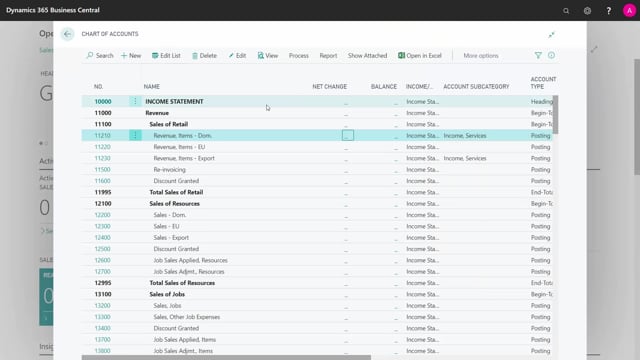
Before you start, check the chart of accounts to confirm there are no postings yet. A clean database with no existing entries is the right starting point. When you remove the filters on the entries and see nothing, you know you are working from a blank slate and ready to post.
At this stage you should already have set up vendors, customers, and items. With that in place, you are ready to enter your opening balances.
Setting up the general journal for opening balances
You do the vendor opening in a general journal. For this purpose, use a manual journal batch where no number series is assigned. That way you can enter whatever document number you prefer, which matters because you want to reuse the document numbers from your old system.
Here are the fields you fill in on each line:
- Document type Select Invoice for a vendor invoice, or Credit Memo where relevant.
- Document number Use the document number from the posted document in your old system, so the history is preserved.
- Account type and account Set the type to Vendor and select the vendor account.
- Description Use this for your internal order number if you want to keep that reference from the old entry.
- External document number Enter the external document number from the vendor invoice, which you should already have in your old system.
- Currency code Enter the currency if the entry is in a foreign currency.
- Amount Enter the outstanding amount on the vendor entry.
- Dimensions If you use dimensions, enter the project code or whatever dimension applies, so it carries into the new system.
Choosing the correct balance account
The balance account has to be a G/L account, specifically the payables account, because you want the chart of accounts to net to zero. To find the correct account, go into the vendor posting group and look up the payables account there.
In many setups the payables account is the same across all vendor posting groups, so you do not have to distinguish between them. Once the balance account is set, the line is ready to post.
What happens when you post
When you post the line, it nets to zero in the chart of accounts and creates a vendor ledger entry. You can prepare a full G/L journal with all your vendor openings in advance, including invoices and credit memos. On each line you set the sign correctly, along with dimensions and amounts.
After posting, the journal has created G/L entries on your vendor account, with the balance going to the payables account. When you look at the vendor account, the total nets to zero. The system did post everything, but because the payables side offsets it, the net is zero. That is what lets you post your actual opening balance afterwards.
When you open the vendor ledger entries, you can see that all your open vendor ledger entries were created correctly. Entries that are past due show in red. At that point everything is correct and ready for your G/L opening in the chart of accounts.
Why the sign matters
Because you are mixing invoices and credit memos in the same journal, the sign on each line determines whether the entry increases or reduces what you owe the vendor. Get the sign wrong and the open balance for that vendor will be wrong. Check every line before you post.
Q&A
Which open entries should I import when going live with Business Central?
You import the open vendor ledger entries, meaning the invoices and credit memos that are still outstanding and not yet posted as paid in your old system.
Where do I enter open vendor ledger entries in Business Central?
You enter them in a general journal. Use a manual journal batch without a number series so you can use the document numbers from your old system.
Which balance account should I use for vendor opening balances?
Use the payables account from the vendor posting group. This makes the chart of accounts net to zero, so you can post your G/L opening balance separately.
How do I find the correct payables account?
Open the vendor posting group and look up the payables account there. In many setups it is the same account across all vendor posting groups.
Why does the vendor account net to zero after posting the opening entries?
The vendor side and the payables balance account offset each other. Everything posts, but the net is zero, which lets you post your actual opening balance afterwards while still creating the open vendor ledger entries.
What do I need to watch out for with invoices and credit memos in the same journal?
You must set the sign correctly on each line. Invoices and credit memos have opposite signs, so a wrong sign produces a wrong open balance for that vendor.
How can I keep the document history from my old system?
Use the document number from the posted document in your old system, enter the external document number from the vendor invoice, and use the description field for your internal order number.