
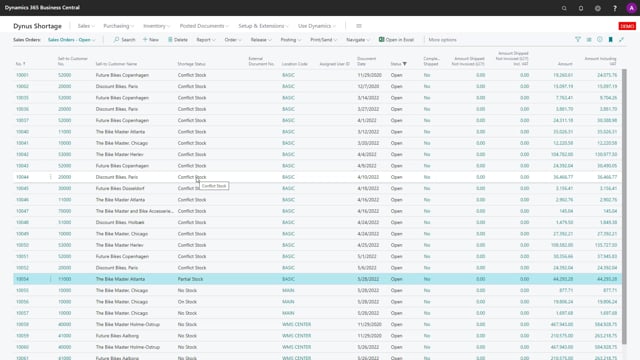


The shortage status calculation in Business Central lets you decide whether to base availability on your current inventory alone, or to also factor in expected future supplies. The setting that controls this is the Include Expected Supply checkmark in the shortage status setup. Leave it unchecked when you need to know what you can ship right now. Check it when you want to forecast which future orders will run into conflicts.
One thing to watch out for: when you combine the use of due dates with the expected supply functionality, the same item can show as in stock on one order while showing as a conflict or partial delivery on another. That is because the orders have different dates.
What the Shortage Status Calculation Does
The shortage status calculation can take your actual inventory into account, or it can also include your expected future supplies. Which of the two you get depends on a single setting.
When you run the report or define the setup, the shortage status has a checkmark called Include Expected Supply. If you don’t check this box, only your existing inventory is taken into account.
When to Include Expected Supply and When to Leave It Out
The right choice depends on what you are trying to figure out:
- If you use the shortage status as a tool to calculate what you can ship tomorrow, you should not include expected supply. You only want to see what is physically on hand.
- If you use it as a tool to figure out which future orders have conflicts, you can include expected supplies. This gives you a forward-looking view of where problems will appear.
Watch Out When Combining Due Dates and Expected Supply
Be aware of what happens when you use both the due dates and the expected supply functionality together. The same item could appear as in stock on one order, but show up as conflict stock or partial delivery on other orders. The reason is the date difference between the orders. An item that is available in time for one order may not be available in time for another, so the same stock leads to different results depending on the order’s date.
Q&A
What does the Include Expected Supply checkmark do in the shortage status?
It controls whether the shortage status calculation factors in expected future supplies. If you leave it unchecked, only your existing inventory is taken into account. If you check it, expected future supplies are included in the calculation.
Should I include expected supply when checking what I can ship tomorrow?
No. To see what you can ship tomorrow, leave Include Expected Supply unchecked so that only your current physical inventory is considered.
When should I include expected supply?
Include expected supply when you want to look ahead and identify which future orders will have conflicts. This gives you a forward-looking view rather than just your current stock position.
Why does the same item show as in stock on one order but in conflict on another?
This happens when you use due dates together with the expected supply functionality. The orders have different dates, so an item that is available in time for one order may not be available in time for another. The same stock therefore produces different results depending on the order’s date.