
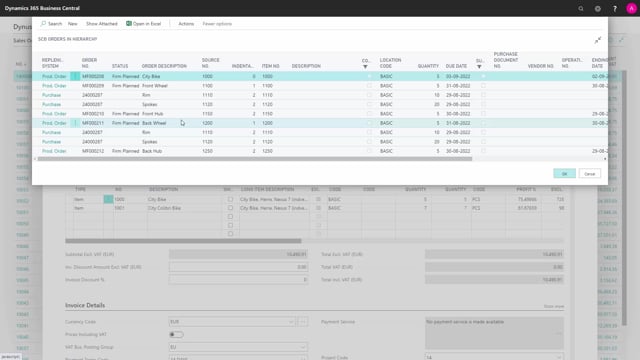


Some Microsoft Dynamics 365 Business Central customers need a way to keep related orders together without using full configuration functionality. The bundling feature does exactly that. It links a sales order to its underlying purchase orders and production orders through a shared reference number.
You can filter the order list on the reference number to see every order that belongs to the same sales order line. You can also view the connection in a hierarchy. This gives everyone in the supply chain a clear overview, so the shop floor and the warehouse can handle the related orders together.
When you need bundling instead of configuration
We sometimes meet requirements from customers who don’t actually need the configuration functionality. They just need the bundling functionality. In practice, this means they want to bundle a sales order together with the underlying purchase orders or production orders.
These customers typically want to handle the process manually. For example, they might want the vendor to ship the goods directly. So even though it works like a kind of drop shipment, they still want to keep some of the purchase functionality in their own hands.
How the reference number ties the orders together
The foundation of the bundling feature is the reference number. This number is displayed on both the production orders and the purchase orders, and it’s what binds everything together.
From the order list, you can filter on the reference number. You can also see the related orders in a hierarchy. That way, everyone in the supply chain knows that a given set of production orders all belong to one sales order line on the output side.
Better overview on the shop floor and in the warehouse
Once the orders share a reference number, you can place them together and work with them together. This applies both on the shop floor and in the warehouse. The result is a simpler overview for everyone involved, because it’s clear which orders belong together and why.
Q&A
What is the bundling functionality in Business Central?
It links a sales order to its underlying purchase orders and production orders through a shared reference number, without requiring full configuration functionality.
When should you use bundling instead of configuration?
Use bundling when you only need to keep related orders connected and don’t need configuration. It’s a good fit when you want to handle the process manually, such as having a vendor ship goods directly.
How does the reference number work?
The reference number is displayed on the production orders and purchase orders and ties them all together. You can filter the order list on this number and view the connected orders in a hierarchy.
What is the benefit for the supply chain?
Everyone can see that a set of production orders belongs to one sales order line. This lets the shop floor and warehouse place the orders together and work with them as a group, giving a clearer overview for everyone.