
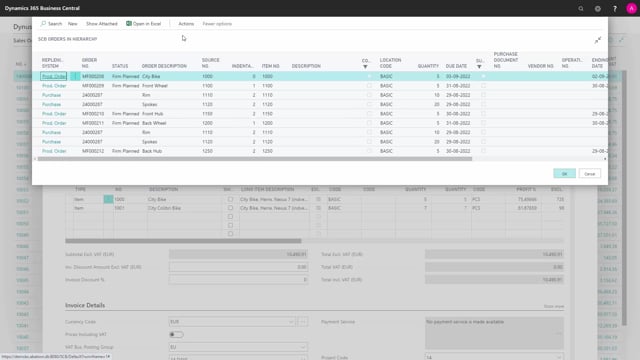


The sales configurator in Microsoft Dynamics 365 Business Central lets you distinguish between items that belong in a production hierarchy and items you simply replenish to stock. You control this with a checkmark on the item and SKU card.
Items marked as part of the hierarchy get their own specific purchase or production orders, and you handle them manually within the hierarchy structure. All other items fall outside the hierarchy and follow your normal replenishment, such as standard MRP or the requisition worksheet.
This separation means you only manage the items that genuinely need hierarchy-level control, while everything else runs through your usual stock replenishment without extra effort.
Distinguishing hierarchy items from stock items in the sales configurator
One of the core principles in the sales configurator is the ability to tell apart different types of items. Some items are part of a hierarchy and need to be handled within that structure. Others simply need to be produced or bought to stock.
When you look at a full bill of material, you see both kinds. The orders built from the hierarchy contain the items that require specific handling. Alongside them, you find other items that are not part of the hierarchy at all.
How items outside the hierarchy are handled
For the items outside the hierarchy, you don’t create specific purchase orders or specific production orders. These items are bought to stock or produced to stock using whatever replenishment methodology you already have in place.
That keeps things simple. There’s no need to manage every component individually when it can flow through your standard process.
Setting up the hierarchy checkmark on the item and SKU card
You control the behaviour with a checkmark on the item and SKU card. When an item is marked, it becomes part of the hierarchy and you handle it manually within that structure.
Everything else is replenished the normal way, through standard MRP, the requisition worksheet, or however you usually replenish stock. This functionality gives you a clear split between the items that need hands-on management in the hierarchy and the items that take care of themselves.
Q&A
How do you mark an item as part of the hierarchy in the sales configurator?
You set a checkmark on the item and SKU card. Marked items are handled manually within the hierarchy, while unmarked items are replenished through your normal process.
How are items outside the hierarchy replenished?
Items outside the hierarchy are bought to stock or produced to stock using your normal replenishment methodology, such as standard MRP or the requisition worksheet. They don’t get specific purchase or production orders.
Why distinguish between hierarchy items and stock items?
The split lets you focus manual handling only on the items that need hierarchy-level control. All other components flow through your standard replenishment without extra effort.