
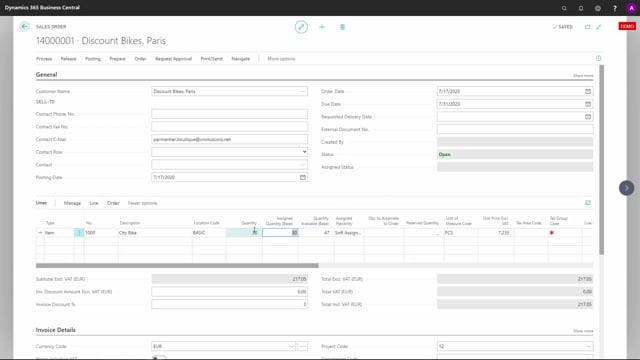


If you use assigned quantity functionality across multiple companies with intercompany transfers, the assigned quantity is only locked when the sales order is released, not when it is created. This creates a gap where the quantity you see at order entry may differ from what you actually get.
The graphical inventory profile in your sales company does not account for sales orders that are still open and have not yet gone through the intercompany transaction. So the available quantity can look higher than it really is.
When several salespeople in different sales companies create orders for the same item at the same time, the first one to release the order gets the actual assigned quantity. The last order released may not have enough quantity left, and the assigned quantity base will simply be whatever remains.
The practical fix is to train your salespeople: the time between entering a sales order and releasing it can change the quantity that ends up being assigned.
How assigned quantity works across companies with intercompany functionality
There is a limitation worth knowing about if you use assigned quantity in a setup with more than one company. Specifically, this applies when you use intercompany functionality to move a sales order from one company through a purchase order to a sales order in an inventory company.
In that flow there are some gaps in the assigned quantity that can catch you out. The core issue is timing: the quantity is not committed in the inventory company until the sales order is actually released and the intercompany transaction is made.
Why the graphical inventory profile can be misleading
Here is a concrete example. Say you create a sales order line in a sales company for a quantity of 30. If you then look at the graphical inventory profile in the other company, where the assignment is calculated, you might see an ending inventory of 47.
That number is misleading. Since you just made a sales order of 30, the inventory should show 17. The reason it still shows 47 is that the graphical profile is calculated in the sales company, and the sales order is still open. The intercompany transaction has not been made yet.
When you do the intercompany transaction using intercompany functionality, a sales order is created in the inventory company, which then gets assigned. If you use the intercompany app, it also brings back the assigned quantity base amount.
The risk when multiple salespeople create orders at the same time
The problem becomes real in a multi-company setup. You could have different salespeople sitting in different sales companies, creating sales orders at the same time. All of those orders are open, and they might all be assigned against the same available stock.
But the assigned quantity is only confirmed at release. When the first salesperson releases their order and runs the intercompany functionality, it returns the actual assigned quantity. The last sales order to be released might not have enough quantity left. At that point the assigned quantity base will just be whatever is still available.
What to do about it
If you use assigned quantity functionality across companies, the most important thing is to train your salespeople. They need to understand that the gap between entering a sales order and releasing it can affect the quantity that gets assigned. The number they see at entry is not guaranteed until the order is released and the intercompany transaction has run.
Q&A
When is assigned quantity actually committed across companies?
It is committed when the sales order is released and the intercompany transaction is made, not when the sales order is created. Until then, the quantity is only tentative.
Why does the graphical inventory profile show too much available stock?
Because it is calculated in the sales company and does not account for open sales orders that have not yet gone through the intercompany transaction. An open order for 30 will not be reflected in the inventory company’s profile until it is released.
What happens when several salespeople create orders for the same item at once?
All the open orders may appear to be assigned against the same stock. When the first order is released, it takes the actual assigned quantity. The last order released may run short, and its assigned quantity base will only be whatever quantity is left.
How do you prevent problems with assigned quantity in a multi-company setup?
Train your salespeople to understand that the quantity shown at order entry can change before release. The gap between entering and releasing a sales order can affect the quantity that ends up being assigned.