


The assign quantity functionality in Microsoft Dynamics 365 Business Central lets you handle situations where a supply is delayed or canceled. You run the assign quantity report to reassign supply to your sales order lines based on what you can actually fulfill.
When you postpone a supply, such as a firm planned production order, your existing assignments may no longer hold. The demands you previously promised to customers can no longer be covered, and you need to rerun the assign quantity report to recalculate which lines can be fulfilled.
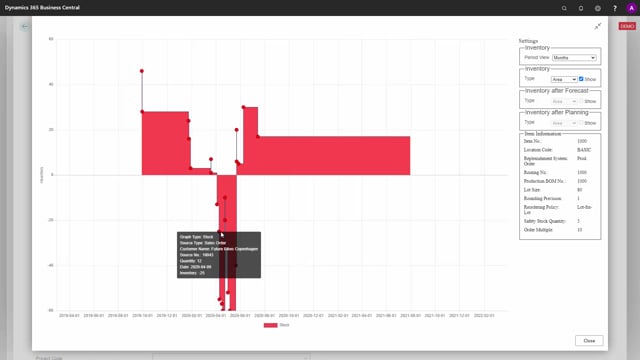
The graphical profile shows you the difference between the full inventory and the assigned quantity. Use it to spot negative inventory and to decide which demands to move.
You can reassign across all your sales orders in one run. To move the demands that can no longer be fulfilled, use the Reverse Planning app or adjust them manually after contacting your customers.
Using assign quantity to handle delayed or canceled supply
With assign quantity, you can run a report to reassign supply if a delivery is delayed or canceled. The point is to make sure the quantity you have actually covers the demands you commit to.
If you open an item and use the assign quantity functionality, the graphical view shows that you never drop below zero inventory. In the example, the end inventory lands at 17, and everything that is assigned is genuinely fulfilled.
If you view the same graphical profile for the item without assigned quantity, the picture changes. You see some negative inventory, minus four and minus six at certain points. Those demands cannot be fulfilled. The assign quantity logic prevents you from promising more than you can deliver.
What happens when you reschedule a production order
Consider moving one of the supplies. In the example, a firm planned production order, number 137, is scheduled for April. For some reason, maybe missing components, you have to reschedule it to 25 May and refresh it.
You can run the graphical profile from the production order, but it does not matter where you run it from. A sales order works just as well.
Once you look at the assigned quantity after the reschedule, the result is poor. All the negative demand now has sales order lines with assigned quantity that can no longer be fulfilled. That is a problem, because you have promised quantities you can no longer deliver on time.
Rerunning the assign quantity report after a change
To fix this, you rerun the assign quantity report for the sales orders. This recalculates the possible assignment based on the new supply date. You also need to inform your customers, because a lot of demands will no longer be fulfilled on the original schedule.
After rerunning the report, the graphical profile shows that everything possible is assigned. The end inventory is now much higher, because you postponed the supply and many demands can no longer be met from current stock.
Reading the full inventory versus the assigned quantity
If you run the profile again and look at the full inventory rather than only the assigned quantity, the negative inventory grows. In the example it started at minus six and ends up at minus 64 after the production order moves.
This tells you exactly how much demand you need to move. You can handle this with the Reverse Planning app if you use it, or you do it manually by reading the profile, contacting your customer, and moving the demands. Either way, you can reassign across all your sales orders in one go.
Q&A
What does the assign quantity functionality do in Business Central?
It lets you run a report that reassigns available supply to your sales order lines based on what you can actually fulfill. It prevents you from promising more than your inventory covers, so you never drop below zero on assigned demand.
What happens to assigned quantities when I reschedule a supply?
The existing assignments may no longer hold. If you postpone a production order, sales order lines that were assigned may no longer be fulfillable. You need to rerun the assign quantity report to recalculate the valid assignments.
How do I move demands that can no longer be fulfilled?
Use the Reverse Planning app if you have it, or move them manually by reading the graphical profile, contacting your customers, and adjusting the orders. You can reassign across all your sales orders in one run.
What is the difference between full inventory and assigned quantity in the graphical profile?
The assigned quantity view shows only what you have committed and can fulfill. The full inventory view shows the actual stock position, including negative inventory. Comparing them tells you how much demand you need to move after a supply change.