


The graphical inventory profile in Microsoft Dynamics 365 Business Central gives you a flexible, visual overview of inventory levels for a specific item over time. You open it directly from a sales order line or other relevant documents to see how the inventory develops for that item.
You control what the profile shows by setting parameters. You can filter by item number and location, and you can choose to include only released sales orders and released purchase orders, or include forecast and planning lines from requisition and planning worksheets.
When you include forecast, the graph shows two lines. The blue line includes forecast and the red line excludes it, so you can compare the two scenarios directly.
You use the graphical inventory profile to explain what the inventory will look like in the future and to identify when an item runs into a negative balance and when it becomes available again.
What the graphical inventory profile shows
The graphical inventory profile gives you a flexible view of the inventory development for specific items. You can open it from places where you work with an item, for example a sales order line, where you want to see the graphical profile for the item on that line.
Inside the profile you select the parameters you want. If you select item number 1000 with location Basic, the profile displays the inventory development for those filters. In that example the lowest inventory level reaches minus 6, which you can read directly from the graph.
Filtering the inventory profile with parameters
You can adjust the parameters to focus on exactly the scenario you want to analyse. For example, you can choose to view only released sales orders and released purchase orders. When you apply those filters and view the profile again, you get a different inventory profile that reflects only the released documents.
This means you can build the profile from many different combinations of parameters, depending on what you need to see.
Including forecast in the inventory profile
When you view the graphical profile, you can include forecast to see how the inventory looks with forecast taken into account. The graph then shows two lines:
- The blue line shows the inventory development including forecast.
- The red line shows the inventory development without forecast.
Having both lines in the same overview lets you see the difference between the two scenarios at a glance.
Including planning lines from worksheets
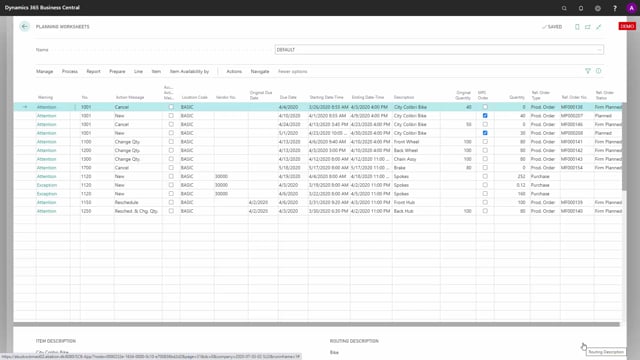
You can also include planning lines in the profile. This is useful if you work with requisition worksheets or planning worksheets. Taking item number 1000 as the example, you can view the profile both with forecast and with planning lines included.
When you deselect the forecast, you see the inventory including planning lines. If there are no planning lines in the worksheet, the inventory stays the same. But if you have planning lines in the worksheet, you see the difference reflected in the graphical profile.
Using the inventory profile to plan availability
The point is that you can view the graphical profile for any scenario you want, combining forecast, planning lines, released documents and other parameters. In the example shown, the forecast and the planning lines make the difference in the graph.
You use this tool to explain what the inventory will look like over time and to see when an item will become available again after a period of negative inventory.
Q&A
Where do you open the graphical inventory profile in Business Central?
You open it from places where you work with an item, for example directly from a sales order line, so you can see the graphical inventory profile for the item on that line.
What do the blue and red lines mean in the graphical inventory profile?
The blue line shows the inventory development including forecast, and the red line shows the inventory development without forecast. Showing both lets you compare the two scenarios in the same overview.
Can you include planning lines from worksheets in the inventory profile?
Yes. You can include planning lines from requisition worksheets or planning worksheets. If there are no planning lines in the worksheet, the inventory stays the same, but if there are planning lines, you see the difference in the graphical profile.
What parameters can you filter the inventory profile by?
You can filter by item number and location, and you can choose to include only released sales orders and released purchase orders, as well as forecast and planning lines. This lets you build the profile from many different combinations.
What can you use the graphical inventory profile for?
You use it to explain what the inventory will look like over time and to identify when an item goes into a negative balance and when it becomes available again.