


In Business Central you can set up an item so it requires an expiration date every time you handle it. You do this by assigning an item tracking code to the item and enabling the “Require Expiration Date” setting on that tracking code.
The system does not suggest an expiration date for you. It forces you to enter one manually whenever you add the item to inventory through a purchase order, assembly order, or production order output.
You can verify that an item is being handled correctly by checking its item ledger entries, where both the lot number and the expiration date are recorded.
How expiration date handling works on an item in Business Central
For some items you need to track expiration dates. Think of products like food, where each batch has a date by which it should be used or sold. Business Central lets you set up an item so that it must be handled by expiration date, which means you have to enter a date each time you receive, produce, or move the item.
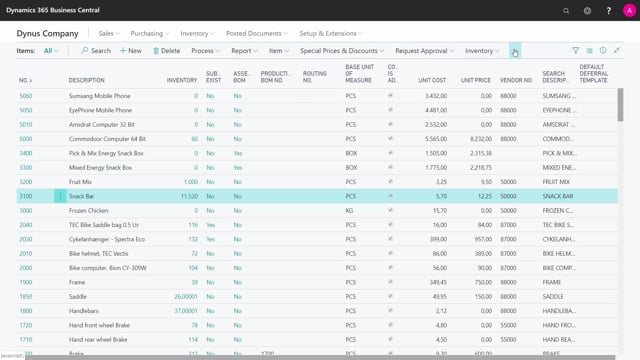
To see how this works in practice, take a snack bar item as an example. If you navigate into the item ledger entries for that item, you can see that it carries a lot number on the entries, and each entry has an expiration date attached to it.
The expiration date is always entered manually
The expiration date is entered by hand. When you manufacture or produce the item, or when you buy it, you enter the expiration date in the item tracking window. The system does not guess or propose a date for you. Instead, it forces you to type in the expiration date, as long as you have set the item up to require it.
Setting up the item tracking code to require an expiration date
The setup starts on the item card. In the item tracking area of the card, you select an item tracking code from a list. That item tracking code is where the actual behaviour is defined.
When you open the item tracking code, you put a check mark in the “Require Expiration Date” field. This check mark is what controls the whole thing. With it enabled, Business Central makes sure that when you add the item to inventory, it asks you for an expiration date that you have to enter.
This applies across the different ways you bring an item into stock:
- Purchase orders
- Assembly orders
- Production orders, when you post the output
In each of these cases, the system stops and requires the expiration date before you can complete the transaction.
Verifying that the item is handled correctly
If you want to confirm that an item is being handled the way you expect, go into the item’s entries. There you can check that the item ledger entries carry both a lot number and an expiration date. That tells you the tracking and the dating are working as intended.
Q&A
How do I make Business Central require an expiration date for an item?
On the item card, go to the item tracking area and assign an item tracking code. Then open that item tracking code and enable the “Require Expiration Date” check mark. After that, Business Central will ask you for an expiration date whenever you add the item to inventory.
Does Business Central suggest an expiration date automatically?
No. The expiration date is always entered manually. The system does not propose a date, but it will force you to enter one if the item tracking code requires it.
When does Business Central ask me for an expiration date?
It asks when you add the item to inventory through a purchase order, an assembly order, or when you post output on a production order.
How can I check whether an item is tracked with lot numbers and expiration dates?
Navigate into the item’s entries and look at the item ledger entries. There you can see both the lot number and the expiration date recorded on each entry.