


In Business Central you can track inventory with both serial numbers and lot numbers, and the core difference is the quantity rule. A serial number always has a quantity of exactly one, so each individual unit gets its own number. A lot number can cover any quantity, including decimals, and the remaining quantity decreases as you use the lot.
Use serial numbers when you need to track each physical unit individually, such as a computer. Use lot numbers when you handle items in batches, such as a fruit mix, where one lot can hold a thousand units.
Serial numbers track each unit individually with a quantity of one
When you assign a serial number definition to an item, Business Central always checks that the quantity equals one. This means every single unit needs its own serial number.
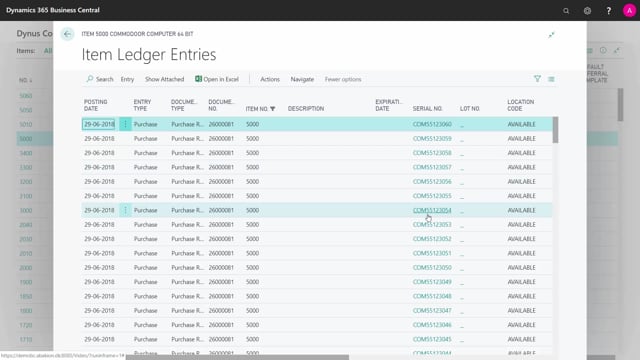
Take a computer with 60 units on inventory as an example. If you open the item ledger entries, you see a separate entry for each unit, all with a serial number assigned and a quantity of one. You could buy all 60 in a single purchase order line, but you still have to define a serial number for each one, each with a quantity of one.
Lot numbers track batches with any quantity, including decimals
Lot numbers work differently. With a lot number definition, you can assign any quantity to a single lot. For example, a fruit mix item can have a lot number with a quantity of a thousand.
The lot number appears in its own column in the item ledger entries, separate from the serial number column. As you start consuming from the lot, the remaining quantity simply decreases. You can use whatever quantities you want, and lot numbers also support decimal quantities.
Choosing between serial numbers and lot numbers
The decision comes down to how you handle the item. If you need to follow each individual unit through your system, serial numbers are the right choice because they force a quantity of one per number. If you work with batches and want to track a group of units under a single identifier, lot numbers give you the flexibility to handle large quantities and decimals under one number.
Q&A
What is the main difference between serial numbers and lot numbers in Business Central?
A serial number always has a quantity of exactly one, so each unit gets its own number. A lot number can cover any quantity, including decimals, and tracks a batch of units under a single number.
Can a lot number use decimal quantities?
Yes. Lot numbers support decimal quantities, and the remaining quantity decreases as you consume from the lot.
If I buy 60 serial-numbered items in one purchase order line, do I still need separate serial numbers?
Yes. Even though you can buy all 60 in a single purchase order line, you must define a serial number for each unit, each with a quantity of one.
When should I use serial numbers versus lot numbers?
Use serial numbers when you need to track each physical unit individually, such as a computer. Use lot numbers when you handle items in batches, such as a fruit mix where one lot can hold a thousand units.