
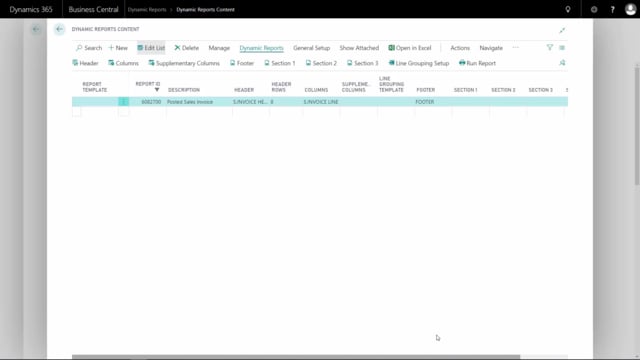


In Microsoft Dynamics 365 Business Central, you can control which language is used in footers and sections on your printed documents. You set this up using language codes, where a blank language code applies to all languages and a specific language code overrides the default for that language.
You define the setup per language. When the language code is blank, Business Central uses that text for any language not specifically defined. When you create a line for a specific language, such as Danish, Business Central uses that translated text instead.
This lets you translate field labels. For example, the English footer shows “telephone” and “VAT number”, while the Danish version shows the translated terms and a “CVR number” instead of “VAT number”.
Controlling language in footers and sections
In Business Central, you can work with languages in the footers and sections that appear on your documents. This is handled in the setup, where you define the text for each language code.
A blank language code applies to all languages. If you leave the language code blank, the text you enter is used for every language that isn’t specifically defined elsewhere in the setup.
Defining text for a specific language
When you create a new line and assign it to a single language, that setup is used only for that specific language. This gives you control over exactly what gets printed depending on the document language.
In the line with the blank language code, you enter the general text. For example, you put in “tel” for telephone and “VAT number” for the VAT number. When the language code is blank, or when a language isn’t defined in the setup, this is the text that gets printed.
Example: translating the footer to Danish
If you look at the Danish line, you can see how the translation works. Here, “telephone” is translated, and the VAT number is changed to state that it is a “CVR number”, which is the Danish equivalent.
This way, you can control the language on the footer so the right terms appear depending on which language the document is printed in.
Q&A
What does a blank language code mean in the footer setup?
A blank language code applies to all languages. The text you enter on that line is printed for any language that isn’t specifically defined in the setup.
How do you set up a footer text for a specific language?
You create a new line and assign it to a single language code. Business Central then uses that setup only for that specific language, overriding the blank default.
Can you translate field labels in the footer, such as VAT number?
Yes. For example, in the Danish setup you can translate “telephone” and change “VAT number” to “CVR number” so the correct local terms appear on the document.