
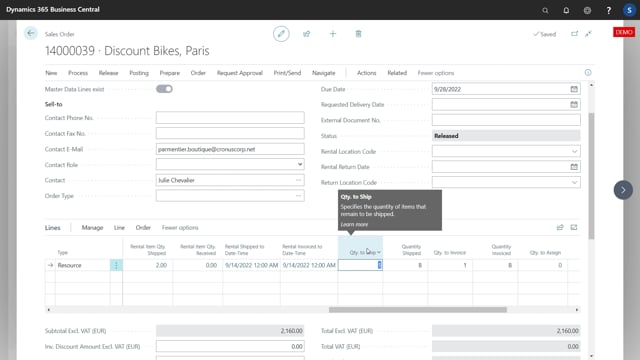


When you work with Rental Management in Business Central, the quantity fields on a rental line do not always mean what you might expect. The standard fields “Quantity Shipped” and “Quantity to Ship”, along with the related quantities on the transfers, reflect rental days rather than the number of physical items you are renting out. Understanding this distinction prevents confusion when you reconcile what a customer should pay against what you have physically sent out.
In Rental Management, a rental line measures the rental period in days, not the count of items. If you rent out two units of an item for a period of days, the quantity on the rental line shows the number of rental days, because that is what the customer is billed for.
How quantity fields work on a rental line in Rental Management
Consider a resource line with a quantity of nine days. This means you expect to rent out the item for nine days for this customer. The item itself, for example two units of a Segway, is a separate matter. The quantity on the line is about time, not pieces.
In this example you have already shipped eight days. That corresponds to a period of four days with a quantity of two units, counted from day one and four days ahead. The remaining quantity stays as a default “Quantity to Ship” because the transfer is not yet finished. The line is waiting for the next day to pass before more can happen.
Why Quantity Shipped reflects rental days, not pieces
The “Quantity Shipped” and “Quantity to Ship” fields reflect the number of resource days, meaning the rental days the customer should pay for. They do not show the number of physical items on the rental. The physical item count, such as the two Segways, is tracked separately through the rental item and the transfers.
Keep this in mind when you read the figures on a rental line. If you treat the shipped quantity as a piece count, the numbers will not add up against your physical inventory movements. The shipped quantity is your billing basis in rental days.
Q&A
What does Quantity Shipped mean on a rental line in Business Central Rental Management?
It reflects the number of rental days the customer should pay for, not the number of physical items you have sent out.
Why does a rental line show nine days instead of the number of items?
Because the quantity on a rental line measures the rental period in days. The customer is billed per rental day, so the line shows days. The physical item count, for example two units, is tracked separately through the rental item and the transfers.
Why does a quantity remain in Quantity to Ship by default?
The remaining quantity stays as a default in “Quantity to Ship” because the transfer is not yet finished. The line waits for the next rental day to pass before the rest can be shipped.