


Detailed production order planning covers the short horizon, typically from two days to two weeks ahead. The job at this stage is to release firm planned production orders into released production orders, and to confirm that everything you release to start can actually be completed.
You have several tools for this in Business Central. You can use Gantt charts, bottleneck planning through add-on apps (this is not standard in Business Central), a BI system, or the MRP batch job. The example below uses the MRP planning run for the detailed planning.
One rule matters above all: respect the dates set by the master planner and the long-term planner. If you plan outside your own window, you risk messing up their plans. Stay firm on the start and end dates you plan from and to.
Running the MRP batch job for detailed production order planning
In the example, the start date is in July and the end date is set almost three weeks later. The planning run is limited to production orders only. The point is to confirm that everything is okay. If nothing pops up, everyone is happy.
In this case, the run produces several cancellations and a change of quantity. Looking at the quantities, the system suggests changing 50 down to 10. That suggestion is not correct here, because marketing is running a campaign and the quantity of 50 is intentional. The detailed planner should not accept those changes.
Using planning flexibility to protect a production order
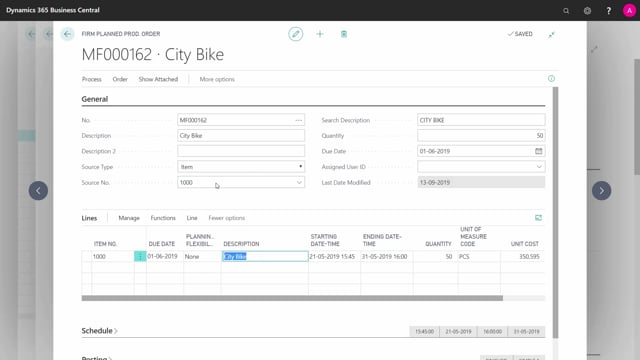
To stop the planning run from suggesting changes to a specific order, use the planning flexibility setting. You have two options:
- Carry it out directly from the planning line by setting planning flexibility to None.
- Lock the order manually beforehand on the firm planned production order itself.
Be aware that planning flexibility is not shown by default on the production order line. You may want to add it to the line so it is visible when you work.
In the example, the detailed planner locks the firm planned production order by setting planning flexibility manually. Then the planning run is repeated with the same parameters.
Confirming the result of the detailed plan
After locking the order and running MRP again, the other suggested lines disappear, because they depended on the first changes. Planning the next three weeks now shows a clean result with nothing left to act on. This only covers the production items the detail planner is responsible for. The next step is to tell the purchasers so they can make sure they can deliver everything that supports the plan.
Q&A
What time horizon does detailed production order planning cover?
Detailed production order planning typically covers a short horizon from two days to two weeks ahead. Its purpose is to release firm planned production orders into released production orders and confirm they can actually be completed.
Which tools can you use for detailed production planning in Business Central?
You can use Gantt charts, bottleneck planning through add-on apps (not standard in Business Central), a BI system, or the MRP batch job.
How do you stop the MRP run from suggesting changes to a specific production order?
Use the planning flexibility setting. Either set planning flexibility to None directly on the planning line, or lock the firm planned production order manually before you run MRP. Note that planning flexibility is not shown by default on the production order line, so you may want to add it.
Why is it important to respect the start and end dates when running detailed planning?
Sticking to firm start and end dates keeps you within your own planning window and prevents you from disrupting the plans set by the master planner and the long-term planner.