


Effective production planning often involves more than one person, and when it does, you need clear boundaries for who controls what. The key is defining your planning horizons so each planner owns the order suggestions and requirements within their own period.
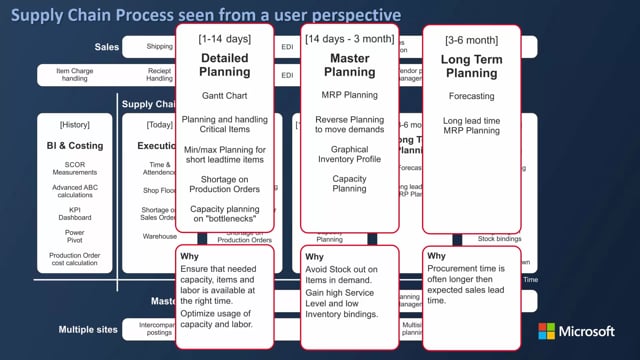
You should set up three planning horizons in your company. A typical setup is 1 to 2 weeks for detailed planning, 2 weeks to 3 months for master planning, and 3 months up to 18 months for long-term planning. The longest horizon depends on the longest lead time among your purchased items.
Each planner controls orders within their own horizon. A master planner cannot change orders that fall inside the detailed planning horizon, because those orders belong to the people doing detailed planning. The same rule applies in reverse and across all three levels.
Why You Need Defined Planning Horizons
When several people are responsible for planning in the same company, confusion follows quickly if no one knows where their responsibility starts and stops. Defining the planning horizons solves this. Everyone knows who is in charge of which orders and which requirements at any given time.
The point is ownership. Within each horizon, one group owns the order suggestions and the requirements. That ownership has to be clear and respected by the other planners.
How the Three Planning Horizons Work
The detailed planning horizon is the closest period, for example 1 to 2 weeks ahead. The orders inside this window are locked to the people doing the detailed planning. A master planner should not be able to change those orders, because they sit inside someone else’s horizon.
The master planning horizon covers the next stretch, for example from 2 weeks to 3 months. The orders and requirements in this period are owned by the people doing master planning.
The long-term planning horizon reaches furthest out, for example from 3 months up to around 18 months. It follows the same principle: the orders within this period belong to the people responsible for long-term planning.
How to Set the Length of Your Long-Term Horizon
The far end of your long-term planning horizon should be driven by your purchase lead times. Find the purchased item with the longest requirement period, and plan at least that far ahead in your long-term planning.
If your longest lead time pushes out toward 18 months, then your long-term horizon needs to stretch that far. The numbers used here are examples. Adjust them to fit the lead times in your own setup.
Q&A
Why should a company define planning horizons?
When more than one person handles planning, you need to be clear about who is in charge of which orders. Defining the horizons makes ownership of order suggestions and requirements explicit for each period, which prevents planners from interfering with each other’s work.
Can a master planner change orders in the detailed planning horizon?
No. Orders inside the detailed planning horizon are locked to the people doing the detailed planning. The master planner cannot change them, because they belong to another planner’s period.
What are typical lengths for the three planning horizons?
A typical example is 1 to 2 weeks for detailed planning, 2 weeks to 3 months for master planning, and 3 months up to 18 months for long-term planning. These are examples and should be adjusted to your own situation.
How far ahead should the long-term planning horizon reach?
It should reach at least as far as the longest lead time among your purchased items. Find the purchase item with the longest requirement period and plan that far ahead in your long-term planning.