


Framework agreements with vendors let you commit to buying a certain quantity of items over a longer period. In Business Central, you have two practical tasks: storing the agreement itself and turning the commitment into actual purchase orders. This article explains how to do both.
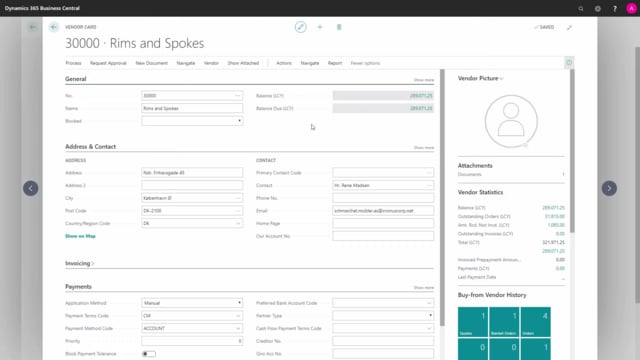
Store the framework agreement by attaching it as a PDF or document to the vendor card. Use the Documents option in the vendor menu so everyone can find it easily.
Choose between blanket purchase orders and demand forecasting to generate supply. Blanket orders let you define the full yearly quantity with an end date and draw purchase orders from it. Demand forecasting tells the system you expect demand on an item, typically at component level, and lets you create purchase orders from the planning worksheet.
Be aware that the planning worksheet does not pick up blanket orders automatically. You have to link blanket orders manually to the purchase orders you create.
Storing framework agreements on the vendor card in Business Central
When you negotiate a framework agreement, you commit to buying a certain amount of items over a longer period, for example a year. The first thing to handle is where you keep the agreement document itself.
We suggest you attach the agreement to the vendor card. Go to the vendor menu, open the Documents area, and attach the file. In a typical case you would add the vendor framework agreement as a PDF on the vendor it belongs to. You can keep adding all your agreements there, so everyone in the organisation can find them easily.
You might decide to store the agreement somewhere else entirely. But if you want it in Business Central, the vendor card is the natural place for it.
Choosing between blanket orders and demand forecasting
Once the agreement is saved, you have to decide how to turn the commitment into supply. You can create blanket orders, use demand forecasting, or combine both. The choice affects how purchase orders get suggested when you calculate your supply.
Using blanket purchase orders for the framework commitment
A blanket purchase order lets you define one order for the full commitment and then draw from it over time. You enter the full quantity, for example the amount for a whole year, and set an ending date. From the blanket order you create individual purchase orders as you go along.
The blanket order is treated as a supply when you run the MRP jobs in the requisition worksheet or the planning worksheet. The end date of the blanket order is where that supply is considered to land. So if your blanket order ends at the end of the year and you only run MRP at the beginning of the year, the planning will only take the existing purchase orders into account, not the full blanket order quantity for later in the year.
Using demand forecasting to create purchase orders
Demand forecasting is a way to tell the system that you expect demand on an item, or that you want to create demand on an item you buy from a vendor. You typically enter the demand forecast at component level if you are a production company. It can also be a sales forecast if it is a sales item.
You enter a forecast for each month, which creates demand, and from the planning worksheet you can create the corresponding purchase orders.
Linking blanket orders to purchase orders manually
One thing to watch out for: the planning worksheet does not grab blanket orders automatically. When you create purchase orders from the planning worksheet, you have to link those purchase orders to the relevant blanket orders manually. Plan for this step so your draws are correctly tied back to the framework commitment.
Q&A
Where should I store vendor framework agreements in Business Central?
Attach the agreement, for example as a PDF, to the relevant vendor card. Use the Documents option in the vendor menu so everyone can find it easily.
What is the difference between blanket orders and demand forecasting for framework agreements?
A blanket order defines the full committed quantity with an end date, and you draw individual purchase orders from it. Demand forecasting tells the system you expect demand on an item by entering a monthly forecast, and you create purchase orders from the planning worksheet. You can use either or both.
How does MRP treat a blanket order’s end date?
The blanket order is considered a supply on its end date. If the end date is at the end of the year and you run MRP at the start of the year, the planning only takes existing purchase orders into account rather than the full blanket order quantity.
Does the planning worksheet pick up blanket orders automatically?
No. The planning worksheet does not grab blanket orders automatically. You have to link the blanket orders manually to the purchase orders you create.
At what level do I enter a demand forecast?
For a production company you typically enter it at component level. It can also be a sales forecast if the item is a sales item. You enter a forecast for each month, which creates demand.