
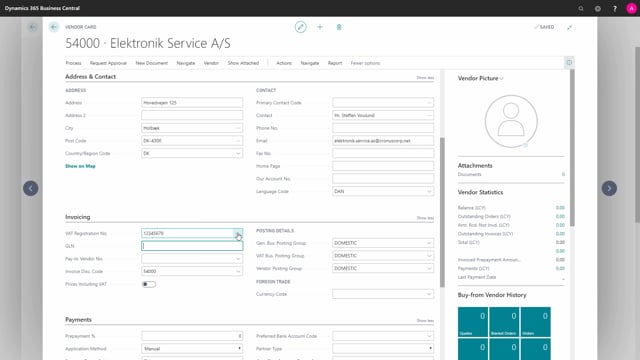


If you work with vendors and customers inside the EU, you can let Business Central verify their VAT registration numbers automatically. The EU VAT Registration Number Validation Service checks each number against the official EU database and tells you whether it is valid.
When you enter a VAT number that does not exist, Business Central returns a message saying it could not find a match and asks you to verify the number. The status on the record shows as not verified or invalid, so you know immediately that something is wrong.
You turn the feature on or off in the EU VAT Registration Number Validation Setup page. When it is enabled, Business Central also pulls back the correct name and address for the validated VAT number, so your vendor and customer cards stay accurate.
What the EU VAT Registration Number Validation Service does in Business Central
The service lets you control a vendor’s VAT registration number directly from Business Central. When you type in a VAT number, the system checks it against the EU VAT validation service through a defined service endpoint.
If the number does not match anything in the EU database, you get a clear message: no match found, please verify you entered the correct number. The record is then marked as not verified or invalid, so the problem is visible right away rather than turning up later in your reporting.
How to enable or disable the validation in the setup page
This is standard functionality in Business Central. You manage it from the EU VAT Registration Number Validation Setup page. There you can see whether the service is enabled and where the service endpoint points to.
You can switch the validation on or off depending on how you want to work. When it is enabled, Business Central runs the check every time you enter a VAT number on a vendor or customer.
Why VAT number validation keeps your master data correct
The real value is that you can confirm a VAT registration number you receive from a vendor is in fact valid. Instead of trusting that the number is correct, you let the EU service verify it for you.
On top of the validation, the service returns the correct name and address tied to the VAT number. That means your vendor card always carries the right details, which helps you avoid errors in invoicing, reporting, and compliance.
Q&A
What does the EU VAT Registration Number Validation Service do in Business Central?
It checks a vendor’s or customer’s VAT registration number against the official EU database. If the number is valid, it confirms it and returns the correct name and address. If it is not valid, Business Central marks the record as not verified or invalid.
Where do you turn the VAT validation on or off?
You manage it from the EU VAT Registration Number Validation Setup page in Business Central. There you can see whether the service is enabled and which service endpoint it uses, and you can enable or disable it.
What happens if you enter an invalid VAT registration number?
Business Central shows a message saying it could not find a match and asks you to verify the number. The record is then flagged as not verified or invalid, so the issue is visible immediately.
Does the validation update the vendor’s name and address?
Yes. When the service confirms a valid VAT number, it returns the correct name and address, so your vendor card stays accurate.