


When you work with an ERP system like Dynamics 365 Business Central, every process falls into one of two categories. It either handles money or it handles quantities. Knowing which category a process belongs to, and knowing which category the person in front of you focuses on, makes a real difference when you implement, use, or get advice on an ERP system.
Most ERP users and consultants are strong in one of these two areas, not both. Accountants, salespeople, purchasers, and CEOs focus on money. Inventory clerks and production workers focus on quantities. When you choose a consultant, ask which area they are strongest in, because almost no one is equally good at both.
Every ERP process handles either money or quantities
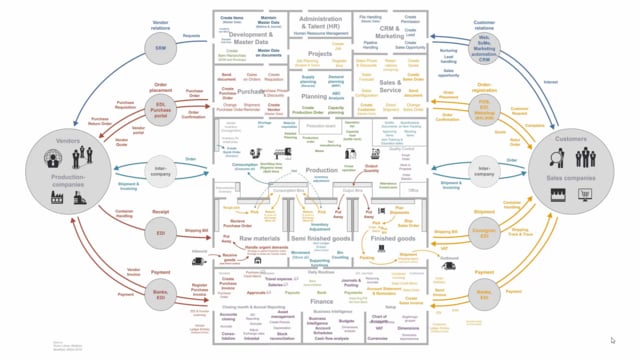
Look at all the processes in an ERP system from an overall perspective, and you can split them into two groups. Some processes are based on handling quantities. These cover your inventory and your manufacturing. Other processes are based on handling money transactions. These cover all the money going in and out of the system.
This split is simple, but it is important to be aware of. It shapes how people think about the system and how they work with it.
Users focus on either money or quantities, not both
Most of the users you meet are oriented toward one side or the other. If you are an accountant, a salesperson, a purchaser, or a CEO, you focus on money. If you are an inventory clerk or a production worker, you focus on quantities.
This is not about job titles alone. It is about where someone’s natural attention goes. People tend to be born with a focus on one thing or the other, and that focus stays with them.
Consultants are specialised in one area
The same pattern applies to ERP consultants. Almost every consultant you meet is focused on either money or quantities. That does not mean they cannot explain the other area. But in their core, they lean toward one side.
In 20 years in the ERP market, only one or two people have turned out to be genuinely good at focusing on both equally. That is rare. When you bring a consultant onto a project, it pays to know which side they are strongest on, so you can match them to the work that matters most to you.
Why this matters for your ERP project
When you understand this distinction, you can read the people around you more accurately. You know why an accountant and a production worker describe the same system in completely different ways. You know which questions to ask a consultant before you trust their advice on inventory versus their advice on finance. And you can make sure your project has the right expertise covering both the money side and the quantity side, rather than assuming one person covers everything.
Q&A
What are the two basic focus areas in an ERP system?
Every ERP process either handles money or handles quantities. Money processes cover all the transactions going in and out of the system. Quantity processes cover inventory and manufacturing.
Which ERP users focus on money and which focus on quantities?
Accountants, salespeople, purchasers, and CEOs focus on money. Inventory clerks and production workers focus on quantities.
Can a single ERP consultant be equally good at both money and quantities?
It is very rare. Almost every consultant is strongest in one area, even if they can explain the other. In 20 years in the ERP market, only one or two people have proven genuinely good at both equally.
Why should you know whether a consultant focuses on money or quantities?
So you can match the consultant to the work that matters most to you and make sure your project covers both the money side and the quantity side. Do not assume one person is equally strong in both areas.