
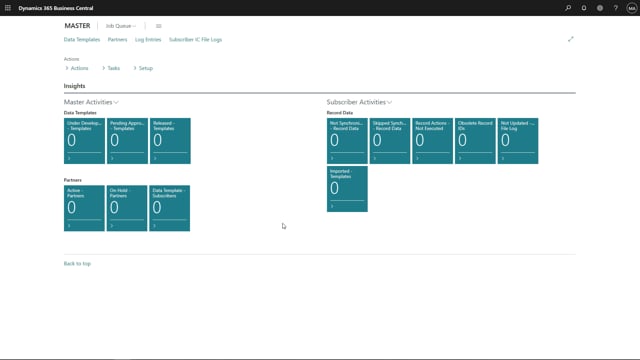


Master data management in Business Central lets you keep tables consistent across multiple companies. One of the building blocks is the data template, which defines exactly which fields from a table should be synchronized. This article walks through how to create a data template in the master company and get it ready for synchronization.
To create a data template, open the Data Templates page in your master company and click New. Give the template a code that you define yourself. You can add a description or leave it blank. If you leave it blank, the description is filled in automatically with the table name once you enter the table ID.
Set the sequence number to control the order in which the table is synchronized. When you select a table, only the primary key field is added by default. For the Payment Terms table, that is the Code field.
To include every field on the table, use the Setup action and choose to enter all fields. Confirm with Yes, and the system adds all available fields from the table to the template. After that, the template is ready to be released.
This article is for Business Central users and decision-makers who manage data across several companies and want to understand how data templates fit into master data synchronization.
Creating a data template in the master company
Start in the master company and open the Data Templates page. Click New to create a new template. You then give the template a code that you define yourself. In this example, the code is for payment terms.
You can choose to fill in the description or leave it blank. If you leave it empty, it updates automatically with the table name once you enter the table ID. So if you want the description to match the table, there is no need to type anything in.
Setting the sequence number and table
Enter a sequence number to specify the order in which you want the table to be synchronized. When you point the template at a table, the system only inserts the primary key by default. For the Payment Terms table, that means only the Code field is added.
Adding all fields from the table
If you want the template to cover every field on the table, use the Setup action and choose to enter all fields. Confirm with Yes. The system then adds all available fields from the Payment Terms table to the template. At that point the template is ready to be released.
Releasing the template and preparing for synchronization
Once you release the template, the record data is created and marked as ready to be synchronized. You can review all the available data from the Payment Terms table directly in the template.
The data template is now ready to synchronize as soon as you add a subscriber to it. The subscriber is the company that receives the synchronized data, so the template stays inactive until at least one is attached.
Q&A
Where do you create a data template in Business Central?
You create it in the master company. Open the Data Templates page and click New.
What is added to a data template by default when you select a table?
Only the primary key field is added by default. For the Payment Terms table, that is the Code field.
How do you include all fields from a table in the template?
Use the Setup action and choose to enter all fields. Confirm with Yes, and the system adds all available fields from the table.
What does the sequence number control?
It controls the order in which the table is synchronized.
Do you have to fill in the description?
No. If you leave it blank, it updates automatically with the name of the table once you enter the table ID.
When is the data template ready to be synchronized?
After you release the template, the record data is created and ready. The template is then ready to synchronize as soon as you add a subscriber to it.