


When you work with template packages in Business Central, you need to release your templates before they can be synchronized to subscribers. This article walks through how to release pending data templates after applying a template package, and explains the options you have along the way.
You release templates from the Master Data menu by choosing the action to release pending data templates. You can release all pending templates at once, or select specific tables to release.
You can run the release in the foreground or schedule it through the job queue. Scheduling through the job queue is the better choice when your tables contain a lot of data, because the release time depends on the amount of data in the tables.
After the templates are released, you add partners to the templates and then run the synchronization.
Releasing pending data templates after applying a template package
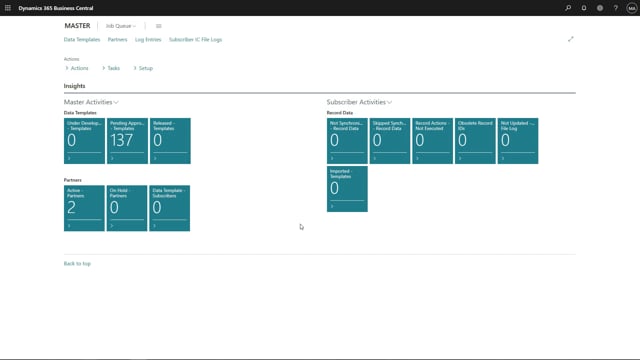
Once you have applied all the templates from a template package, such as the package from Abakion, the templates are pending for approval. Before they can be synchronized to your subscribers, you need to release them.
To do this, go to the task menu, select Master and choose Release Pending Data Templates. From here you can decide which tables you want to release. If you want everything released, simply press OK and all the pending templates will be released.
Running the release in the foreground or scheduling it in the job queue
You have two ways to run the release. You can schedule it so it runs in the background through the job queue, or you can run it in the foreground and press OK to start it right away.
The release can take some time, and how long depends on how much data is in the tables. If you have a lot of data, scheduling the release through the job queue is a good advantage, since it keeps the process running in the background while you continue working.
Next steps after releasing the templates
Once all templates are released, they are ready to be taken further. The next step is to add partners into the templates. After that, you run the synchronization to move the data to your subscribers.
Q&A
Why do I need to release templates before synchronizing?
After you apply the templates from a template package, they are pending for approval. They must be released before they are ready to be synchronized to your subscribers.
Where do I find the option to release pending data templates?
Go to the task menu, select Master and choose Release Pending Data Templates.
Can I release only some templates instead of all of them?
Yes. When you open Release Pending Data Templates, you can choose which tables you want to release. If you press OK without selecting specific tables, all pending templates are released.
Should I run the release in the foreground or schedule it?
You can run it in the foreground or schedule it through the job queue. Scheduling through the job queue is a good choice when you have a lot of data in your tables, since the release runs in the background and can take time depending on the amount of data.
What happens after the templates are released?
Once the templates are released, you add partners to the templates and then run the synchronization.