


Selections in forecasting let you save predefined sets of items or dimensions and pull them into your forecast view without relying on manual filters each time. You can create both manual selections, where you pick the items once and reuse them, and automatic selections, where the system calculates which items match a filter you have defined.
When you apply a selection, it overrides any item filter you have set on the forecast. The selection decides which items are included instead.
Automatic selections recalculate when you update the forecast. If you change parameters on your items, the list of included items can change without you touching the selection filter.
You can use selections in both the items-per-period view and the items-per-dimension view, and you can work with active dimensions when you forecast per dimension.
What selections do in forecasting
Selections give you a way to build a predefined or automatic view for importing items or dimensions into your forecast. Instead of setting up the same filter every time you work with a forecast, you define a selection once and reuse it.
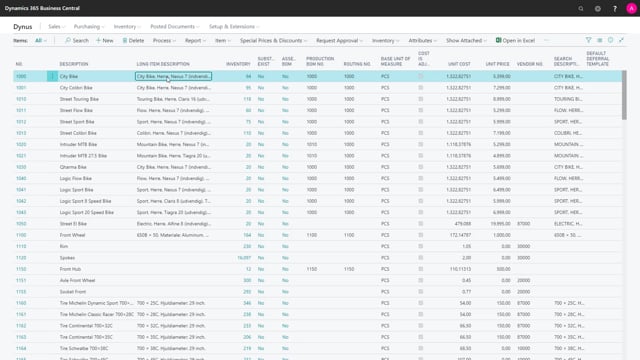
When you enter the forecast per period for all items, you would normally rely on an item filter. For example, you might filter the item list to show only items up to item number 1040. That works, but it ties you to that one filter every time.
With selections, you can define several different sets of items to work with and switch between them as needed.
Manual selections override the item filter
A manual selection is a set of items you have picked once and saved for reuse. You might create one called “summer selection” containing the specific items you want to forecast for that scenario.
When you update your forecast with a manual selection applied, it ignores the item filter. The selection defines which items are included instead. This means you do not have to rebuild a filter every time. You just choose the selection.
Automatic selections recalculate when you update
An automatic selection works differently. Instead of a fixed list, it is a calculation. When you update, it finds the items that fall within whatever filter you have defined.
This makes automatic selections useful when your data changes. If you adjust parameters on your items, the resulting list can differ without any change to the selection filter itself. The selection keeps up with your data automatically.
Using selections across views and dimensions
You can use selections to import items into the items-and-period view. They also work in the items-per-dimension view if you forecast per dimension.
When you forecast per dimension, you can set an active dimension. If you remove a dimension value, you get other dimension values in its place, so the selection adapts to the dimension setup you are working with.
The value of selections
In short, selections are a shortcut for saving automatic or manually defined sets of data. They save you the repeated work of building filters and let you switch quickly between different views of your forecast.
Q&A
What is the difference between a manual and an automatic selection?
A manual selection is a fixed set of items you pick once and save for reuse. An automatic selection is a calculation that finds items matching a filter you have defined, and it recalculates every time you update the forecast.
Does a selection override the item filter on a forecast?
Yes. When you apply a selection, it ignores the item filter and uses the items defined in the selection instead.
Will an automatic selection update if I change item parameters?
Yes. If you change parameters on your items, the list produced by an automatic selection can change without any edit to the selection filter, because it recalculates when you update.
Can I use selections when forecasting per dimension?
Yes. Selections work in both the items-per-period view and the items-per-dimension view. When forecasting per dimension, you can also set an active dimension and adjust dimension values.