
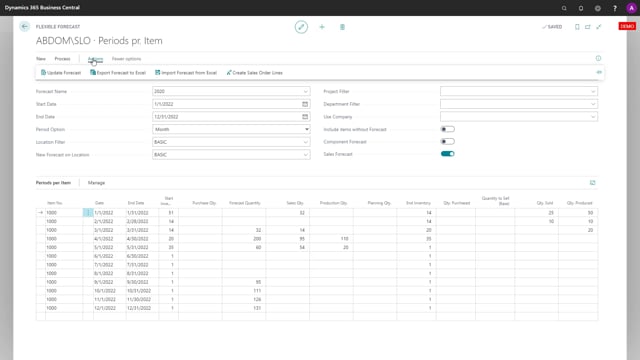


Microsoft Dynamics 365 Business Central lets you import demand forecasts from Excel. You maintain the forecast in Excel, keep the columns and rows intact, and import the file back into Business Central.
You control how the import behaves with the import action. Use “Delete existing forecast” to replace forecast entries, and “Add to existing” to add new figures to what is already there.
The delete action only removes the forecast entries that match the dimensions and split in the lines you import. To avoid deleting the wrong entries, always use the same dimensions and split when you export and import.
You can split a monthly forecast into weeks during import. Business Central divides the monthly figure across the number of weeks in the month and places the amounts on Mondays.
How to import a forecast from Excel into Business Central
Once you have finished modifying your forecast in Excel and kept the columns and rows that you need, you can import the file straight back into Business Central. In the import dialog you select which forecast you want to import to, and then you choose the action that determines what happens to your existing data.
Choosing between Delete existing forecast and Add to existing
The import action gives you two main choices.
Delete existing forecast removes the existing forecast entries before importing the new ones. It only deletes the entries that match the lines you are importing. If you import per customer, per salesperson, and per location, Business Central finds all forecast entries with exactly that setup and deletes them.
Add to existing simply adds the new figures on top of what is already there.
A practical example: if you have five different country managers who each submit their own forecast, you use “Add to existing” so the figures stack together. If one of them later makes a change, you should only import the difference rather than the full figure again, otherwise you will double-count.
Use the same dimensions and split every time
Because the delete action targets entries based on their dimensions and split, you have to be consistent. Always use the same dimension or split when you import and export. If you change the setup between runs, the delete action will not match the entries you expect, and you risk leaving old data in place or removing the wrong figures.
Splitting a monthly forecast into weeks
If you work with forecasts per week, you can split a monthly forecast into weeks during the import. Business Central divides the monthly amount across the number of weeks in the specific month and assigns the figures to Mondays.
Selecting the Excel file and worksheet
When you select your Excel file, Business Central checks whether the file contains more than one worksheet. If it does, you choose the worksheet you want to import from. After that you press OK, and the forecast is imported. When you refresh your forecast in Business Central, you will see it updated with the new figures.
Q&A
What is the difference between Delete existing forecast and Add to existing when importing?
“Delete existing forecast” removes the existing forecast entries that match the lines you import before adding the new ones. “Add to existing” adds the new figures on top of what is already there without deleting anything.
Does the delete action remove all forecast entries?
No. It only deletes the forecast entries that match the dimensions and split in the lines you are importing. If you import per customer, salesperson, and location, it finds and deletes only the entries with that exact setup.
Why should I use the same dimensions when importing and exporting?
Because the delete action matches entries based on their dimensions and split. If you change the setup between runs, the import will not find the entries you expect, and you risk inconsistent or incorrect forecast data.
Can I import a monthly forecast and have it split into weeks?
Yes. During import you can split a monthly forecast into weeks. Business Central divides the monthly amount across the number of weeks in the month and assigns the figures to Mondays.
What happens if my Excel file has more than one worksheet?
Business Central detects multiple worksheets and asks you to select which one to import from before you continue.
How should I handle a forecast change from one of several country managers?
Import only the difference using “Add to existing”. If you import the full revised figure on top of the original, you will double-count that manager’s forecast.