
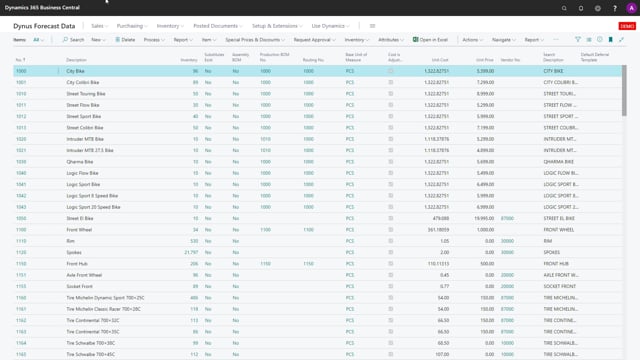


The flexible forecast in Microsoft Dynamics 365 Business Central lets you control which forecast entries you see and create by applying filters on the forecast header. When you update the forecast, the system only shows entries that match the filters you have set, such as location code or project code.
Any new forecast entry you create inherits the filter values from the header. If you filter on a project code and then enter a forecast quantity, the new entry is automatically tagged with that project code.
How filters on the forecast header control the entries you see
When you update the forecast entries in the flexible forecast, the system updates the entries according to the filters you have set on the header. The filters determine both which entries are shown and how new entries are created.
For example, if you have a location filter for a specific location and you add a forecast quantity, such as 32, the system creates a new forecast entry with that quantity and the matching location code.
How new forecast entries inherit values from the header
The filtering also works for dimensions like project code. Say one of your existing entries does not have a project code assigned. If you filter the header on project code 11 and then update your forecast, the list shows only forecasts with project code 11.
When you enter a new forecast under that filter and drill down, the system automatically adds project code 11 to the entry. In this way, the new forecast entry inherits its information from the forecast header.
Why this matters when you work with forecasts
This behaviour means the filters you apply on the header are not just a way to narrow down what you see. They actively shape the data you create. By setting the right filters before you start entering quantities, you make sure that location codes, project codes, and other dimensions are applied consistently to every new entry.
Q&A
What happens when you update forecast entries in the flexible forecast?
The system updates the entries according to the filters you have set on the forecast header. It shows only the entries that match those filters, for example a specific location code or project code.
Do new forecast entries inherit values from the header filters?
Yes. When you create a new forecast entry under an active header filter, it inherits the filter values. If you filter on project code 11 and enter a forecast quantity, the new entry is automatically tagged with project code 11.
How do I make sure a forecast entry gets the right location or project code?
Set the relevant filter on the forecast header before you enter the quantity. The new entry then takes on the location code, project code, or other dimension from the header.