


When you run intercompany trade in Microsoft Dynamics 365 Business Central, you sometimes need to add costs that aren’t tied to an item, such as freight. The good news is that Business Central handles G/L lines across the intercompany flow, so a freight charge added on the selling side carries all the way through to the purchase invoice on the buying side.
When your supply company adds a G/L line for freight on its sales order, that line follows the intercompany transaction. After the supply company ships, invoices, and posts, your sales company sees the freight expense on its purchase invoice automatically. You don’t have to re-enter it manually.
This means the cost flows through the standard ship, invoice, and post steps on both sides. The intercompany setup keeps the two companies in sync, including any extra G/L lines beyond the item lines.
How the intercompany purchase order becomes a sales order
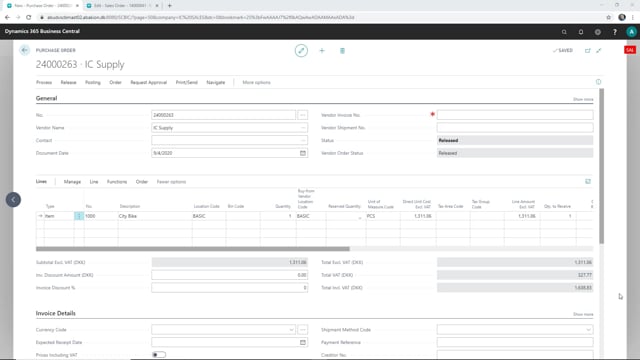
The flow starts in the sales company. When you send a purchase order from your sales company to your supply company, a sales order is automatically created in the supply company.
In this example, the purchase order in the sales company holds an item line and has been released. As soon as it’s released, the matching sales order appears in the supply company, ready to be processed.
Adding a G/L line for freight in the supply company
On the sales order in the supply company, you add a G/L line for the freight expenses. This is a normal G/L line on top of the item line that came across from the intercompany purchase order.
Once the freight line is in place, you release the order and post it. Start by posting the shipment, then post the invoice. With the invoice posted in the supply company, the transaction is ready to flow back to the sales company.
The freight expense on the purchase invoice in the sales company
Back in the sales company, open the purchase order. The freight expense added in the supply company now shows up on the purchase invoice alongside the item line.
From here you post the receipt, then release and post the invoice. The freight cost is included automatically, so the intercompany trade is fully reflected on both sides without any manual rework.
Q&A
Can you add freight or other non-item costs to an intercompany order in Business Central?
Yes. You can add a G/L line for freight or other expenses on the sales order in the supply company. The line follows the intercompany transaction through to the purchase invoice in the sales company.
What happens when you release a purchase order in the sales company?
When you release and send the purchase order from your sales company, Business Central automatically creates a matching sales order in your supply company.
Do you have to re-enter freight charges manually in the buying company?
No. Once the supply company posts the shipment and invoice with the freight G/L line, the freight expense appears automatically on the purchase invoice in the sales company.
What is the posting order for an intercompany transaction with a G/L line?
In the supply company you release the order, post the shipment, then post the invoice. In the sales company you post the receipt, then release and post the invoice.