
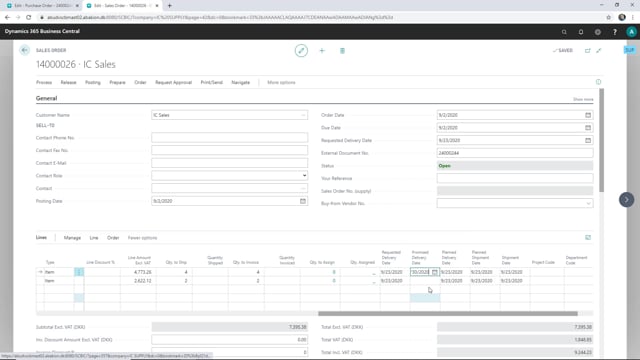


intercompany/”>Intercompany trading in Microsoft Dynamics 365 Business Central lets you keep purchase orders and sales orders synchronised across two companies. When you create and release a purchase order in your sales company, it automatically generates a sales order in the supply company. When the order handler in the supply company enters a promised delivery date and releases the order, that date flows back to update the promised receipt date on your purchase order.
You trigger the update by reopening the sales order in the supply company, entering the promised delivery dates, and releasing the order again. Back in your purchase order, you update the lines and the promised receipt dates appear automatically.
How intercompany purchase orders connect to sales orders in Business Central
When you work with intercompany trading in Business Central, two companies are involved: a sales company that places the order, and a supply company that fulfils it. When your purchase order has been created and released in the sales company, it creates a corresponding sales order in the supply company.
At this point, your purchase order has a promised receipt date, but it has not yet been confirmed by your supplier. You want that date updated with a promised receipt date that comes from the supply company, so both sides of the trade agree on when the goods will arrive.
Updating the promised receipt date from the supply company
The promised receipt date on your purchase order updates when the order handler in the supply company does two things: enters the promised delivery date on the sales order, and releases that order. Releasing the order is what pushes the date back to the sales company.
To walk through the process, go to the sales order in the supply company and reopen it. Enter the promised delivery dates on the lines. You can set different promised delivery dates on individual lines if the goods will arrive at different times. Then release the order again.
Now go back to the sales company and open your purchase order. Update the lines, and the promised receipt dates appear there as well, matching what the supply company committed to.
What this means in practice
This back-and-forth keeps the two orders aligned without anyone having to retype dates manually. The supply company controls when the goods are promised, and that information flows directly to the purchasing side. You always see a confirmed promised receipt date that reflects what the supplier has actually committed to, rather than your original estimate.
Q&A
What happens when I create and release a purchase order in intercompany trading?
Releasing the purchase order in your sales company automatically creates a corresponding sales order in the supply company.
How does the promised receipt date on my purchase order get updated?
The order handler in the supply company enters the promised delivery date on the sales order and releases it. That date then flows back and updates the promised receipt date on your purchase order once you update the lines.
Can I set different promised delivery dates on the same order?
Yes. You can enter different promised delivery dates on individual lines of the sales order in the supply company, and each corresponding receipt date updates on the purchase order.
What do I need to do in the sales company to see the updated dates?
Open your purchase order and update the lines. The promised receipt dates from the supply company then appear automatically.