
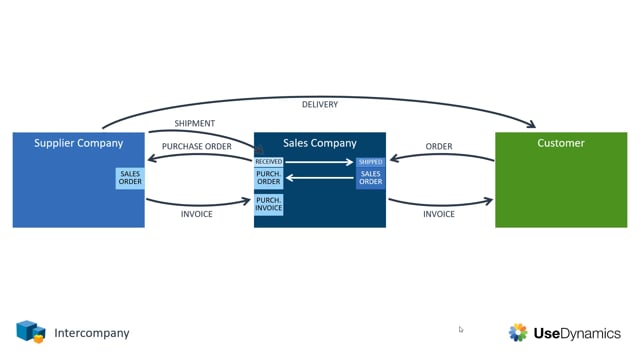


If your business runs more than one company in Microsoft Dynamics 365 Business Central and those companies trade with each other, you need an intercompany solution. A typical setup has a sales company that handles all customer sales and a supply company that holds inventory and manufacturing.
When a customer places an order, you create a sales order in the sales company, then a purchase order to the supply company. The supply company creates a matching sales order. When the goods are delivered to the customer, the supply company posts the shipment, the sales company posts the receipt on the purchase order and the shipment on the customer sales order. Finally, you invoice between the two companies and invoice the customer.
When you need an intercompany solution in Business Central
You need some form of intercompany solution when you run several companies that have transactions between them. This is a common situation for larger businesses that split their operations across separate legal entities.
A classic example is splitting the business into two companies. One is a sales company that handles all of your sales to customers. The other is a supply company where you keep your inventory and run your manufacturing. The two companies trade with each other to fulfil customer demand.
How an order flows between two companies
Handling a single customer order across two companies involves a series of linked transactions. It starts in the sales company and runs through the supply company before the goods reach the customer.
The process works like this:
- You create a sales order for your customer in the sales company.
- You create a purchase order to your supply company.
- The supply company creates a matching sales order for the sales company.
- When the supply company delivers the items to your customer, it posts the shipment on its sales order.
- In the sales company, you post the receipt on your purchase order.
- You then post the shipment on your customer sales order.
Invoicing between companies and to the customer
Once the goods have moved, the invoicing follows. You invoice between your companies so the supply company charges the sales company, and then you invoice your customer from the sales company.
These are all the transactions you handle when working across several companies. Each step needs to be created and posted in the right company, which is why a dedicated intercompany solution makes the process manageable instead of a long chain of manual steps.
Q&A
When do you need an intercompany solution in Business Central?
You need one when you run several companies that have transactions between them, for example a sales company and a supply company that trade with each other to fulfil customer orders.
What is a typical intercompany company setup?
A common setup is a sales company that handles all sales to customers and a supply company that holds inventory and handles manufacturing.
What transactions are involved in handling a customer order across two companies?
You create a sales order for the customer and a purchase order to the supply company. The supply company creates a sales order, posts the shipment when delivering to the customer, then you post the receipt on the purchase order and the shipment on the customer sales order. Finally you invoice between the companies and invoice the customer.