
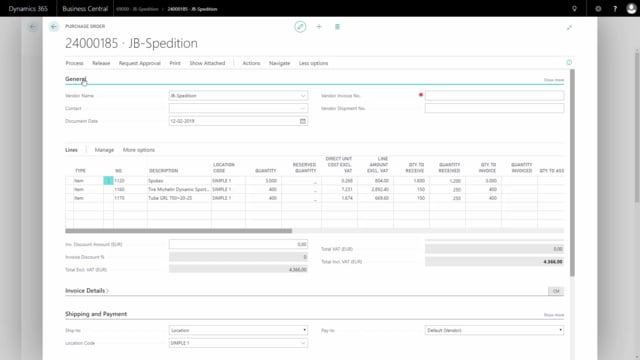


In Business Central you can post a purchase invoice directly from a purchase order. The main advantage of the purchase order is that you can split the receipt and the invoicing into separate steps, and you can receive only part of the goods at a time.
To post the receipt, select Post and choose Receive. This is normally done by warehouse staff when the goods physically arrive. To post the invoice, select Post and choose Invoice, and enter the mandatory vendor invoice number from the document you received from your vendor.
You cannot invoice more than you have received. If you want to add freight or other charges to a released purchase order, you must reopen it first, add a new line, and set the quantity to receive on that line to zero.
The purchase order is deleted automatically when the quantity received and the quantity invoiced both equal the full quantity on the lines.
Posting a purchase invoice directly from a purchase order
In Business Central it is possible to post a purchase invoice directly from a purchase order. The big advantage of working from the purchase order is that you can split the receipt and the invoicing into different steps, and you can receive part of the goods only.
This process is a little different from a normal purchase invoice. Normally a purchaser has bought some items or goods, you later receive an invoice from your vendor, and you want to post it directly against the purchase order.
Finding the open purchase order
In most companies the purchase order list is long. You typically have many open purchase orders because purchasers have requested goods from vendors and are waiting for them to be delivered. By filtering on a specific vendor number, you can quickly narrow the list down. In this example there is only one open purchase order for the vendor, which makes it easy to find.
Posting the receipt first
As an accountant, by the time you receive the purchase invoice, the goods have usually already been received in the warehouse. To show how it works, you can post the receipt yourself first.
Fill in the lines with the items, in this case three different items, and enter only the quantity you actually received. You may have received only part of the order in the first shipment. When you select Post, Business Central asks whether you want to receive, invoice, or both. Choose Receive. In a normal workflow this step is handled by warehouse staff when the goods physically arrive.
After posting the receipt, the purchase order is still open. The quantity to receive now shows the remaining quantity, while the quantity to invoice still shows the full quantity, because the system assumes you will still receive the rest later.
Adding freight before invoicing
When the invoice arrives, it may include freight or other charges that you want to enter on the purchase order. Because the purchase order is automatically released when you post, you need to reopen it before you can add a new line.
Reopen the purchase order and create a new line, using either an item or a G/L account depending on how you want to post the freight. Set the quantity to receive on this line to zero. Otherwise the system would suggest receiving and invoicing more than intended when you are not receiving the remaining quantity at this point.
Posting the invoice for the received quantity
You can now invoice only the quantity you have already received. It is not possible to invoice more than you received. You also need to enter the vendor invoice number, which is mandatory and is written on the invoice you received from your vendor.
When you post, choose to post only the quantity to invoice. After posting, you can see the quantity invoiced on the order, and the remaining quantity to invoice equals the remaining quantity to receive.
Receiving and invoicing in multiple steps
This way you can receive goods as many times as you need to, and post invoices as many times as they arrive from the vendor. The purchase order is deleted automatically once the quantity received and the quantity invoiced both equal the quantity on the lines.
Q&A
Can you post a purchase invoice directly from a purchase order in Business Central?
Yes. You can post a purchase invoice directly from a purchase order. This lets you split the receipt and the invoicing into separate steps and receive only part of the goods at a time.
How do you receive only part of a purchase order?
Enter the quantity you actually received on the lines, select Post, and choose Receive. The quantity to receive then shows the remaining amount, which you can receive later.
Can you invoice more than you have received on a purchase order?
No. Business Central does not let you invoice more than you have received. You can invoice only the quantity already received.
How do you add freight to a purchase order before invoicing?
Because the purchase order is released automatically when you post, you must reopen it first. Then add a new line with an item or G/L account for the freight, and set the quantity to receive on that line to zero so the system does not suggest receiving or invoicing too much.
Is the vendor invoice number mandatory when posting a purchase invoice?
Yes. The vendor invoice number is mandatory. You enter the number written on the invoice you received from your vendor.
When does a purchase order get deleted in Business Central?
The purchase order is deleted automatically once the quantity received and the quantity invoiced both equal the full quantity on the lines.