
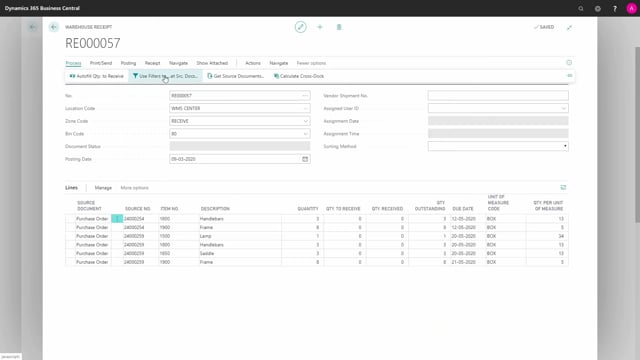


In Microsoft Dynamics 365 Business Central, you can set up predefined filters on a warehouse receipt to control which source documents get imported. The function is called “Use Filters to Get Source Documents,” and it lets you define filters on criteria like vendor number and document type before pulling lines into the receipt.
You access the function from the Process tab on a warehouse receipt. Each filter line works independently, so you can build several different import batches with different criteria.
You filter on vendor number, document type, or any of the other available fields. For example, you can set a filter that only imports purchase orders from a specific vendor.
This function is most common on the outbound side when you create sales shipments. It also makes sense on the inbound side when you have many purchase orders coming into your warehouse and want to control which ones to receive at a time.
Setting up predefined filters on a warehouse receipt
On a warehouse receipt in Business Central, there’s a function to get filters to import source documents. It lets you set up predefined filters for how to receive source documents into your warehouse receipt, so you’re not pulling in everything at once.
To use it, create a new warehouse receipt on whatever location you’re working with. From the Process tab, choose “Use Filters to Get Source Documents.” From here you can define different filters.
How filtering on vendor and document type works
Each line in the filter setup defines its own filter. As an example, on the first line you could filter on vendor 88000, which might not be a very common vendor for you. When you run it, it only imports source document lines with that vendor, because that’s how the line is defined.
If you modify a filter line, you can set all kinds of filters. In a typical example, you filter on vendor number and choose to import only purchase orders. But you can filter on any of the available fields to decide which documents to include in each run.
Building multiple import batches
Because each filter line stands on its own, you can set up many different types of import batches. That gives you a structured way to receive specific groups of documents instead of importing them all in one go.
When to use this function
This function is more common on the outbound side, where you use it when creating sales shipments. It also makes sense on the inbound side. If you have many purchase orders going into your warehouse and want to apply those kinds of filters, predefined filters help you keep the receipt process manageable.
Q&A
What does “Use Filters to Get Source Documents” do on a warehouse receipt?
It lets you set up predefined filters that control which source documents get imported into your warehouse receipt, so you only pull in the lines that match your criteria.
Where do you find the filter function on a warehouse receipt in Business Central?
You find it on the Process tab of the warehouse receipt, under “Use Filters to Get Source Documents.”
What can you filter on when importing source documents?
You can filter on fields like vendor number and document type. For example, you can import only purchase orders from a specific vendor. Each filter line is defined independently.
When should you use predefined filters on warehouse receipts?
They are most common on the outbound side for sales shipments, but also make sense on the inbound side when you have many purchase orders coming into your warehouse and want to receive specific groups of documents at a time.