


Directed put-away and pick is one of the more advanced warehouse configurations in Business Central, and it changes how receipts and put-aways behave across your entire warehouse flow. The setting is controlled by a single checkmark on the location card, but it affects everything from how documents are created to how quantities are tracked in different units of measure.
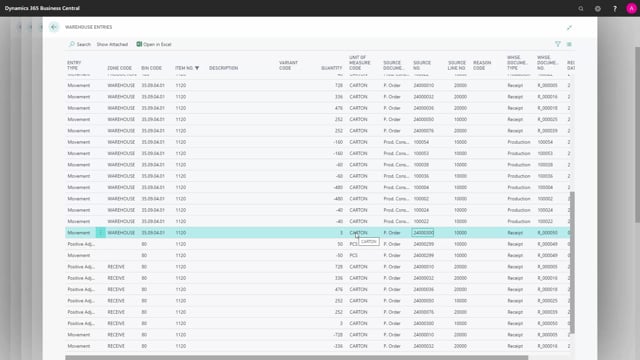
When you enable directed put-away and pick, posting a warehouse receipt automatically posts the purchase order receipt and creates a warehouse put-away document. The receipt and put-away keep the purchase unit of measure (for example, boxes), while the item ledger entry is always recorded in the base unit of measure. The warehouse entries are not split up, so you can work with both the purchase unit of measure and break bulk into base units when you need to.
This article walks through a complete warehouse flow on a location that uses directed put-away and pick, so you can see exactly what happens at each step.
What directed put-away and pick controls in Business Central
On the location card in Business Central there is a checkmark for directed put-away and pick. When you enable it, the location switches to a more advanced warehouse flow that uses separate documents for receiving and putting away goods.
The flow on such a location involves the purchase order, the warehouse receipt and the warehouse put-away. All of this behaviour is driven by that single checkmark. If you turn it on, the system expects you to handle receipts and put-aways as distinct steps with their own documents.
The warehouse flow from purchase order to inventory
The example starts with a purchase order containing two lines, with quantities of 3 and 24. The unit of measure code on the first line matters here: the quantity of 3 equals 75 in the base unit of measure. In other words, you are buying 3 boxes, and each box contains 25 units.
The steps look like this:
- Release the purchase order. Before you can create the warehouse documents, the purchase order needs to be released.
- Create the warehouse receipt. From the purchase order you create a warehouse receipt document, which opens automatically. You enter your quantity in the purchase unit of measure, so it is still 3 boxes (or whatever you actually receive).
- Post the warehouse receipt. Posting the receipt posts the purchase order receipt as well and creates a warehouse put-away document. At this point the quantities received are 3 and 24.
- Handle the warehouse put-away. The put-away document shows quantities of 3 and 24 and suggests where to place the goods in inventory. You enter the quantity to handle, or use the autofill function. You can also change the bin if you want to place the goods somewhere other than the suggested one. The put-away is still handled in the purchase unit of measure.
- Register the warehouse put-away. Registering the put-away creates warehouse entries that move the goods from the receipt bin to the inventory bins.
How units of measure are tracked across documents
This is the part that often causes confusion. The receipt and the put-away both work in the purchase unit of measure, so you see and handle the goods as 3 boxes. But the item ledger entry is always recorded in the base unit of measure.
In the example, the purchase order line for 3 boxes results in an item ledger entry of 75 units, because each box contains 25. So when you check the item, you see 75 added to inventory even though you only handled 3 boxes on the documents.
When you look at the warehouse entries for the purchase document on the correct location, you can see that it added 3 of the purchase unit of measure to the warehouse. The system does not split up the warehouse entries automatically. They stay in the purchase unit of measure unless you choose to break them down.
Working with break bulk and multiple units of measure
Because the warehouse entries are kept in the purchase unit of measure, you can work with them in two ways. You can keep them as the purchase unit of measure, or you can split an entry into a break bulk and convert it into another unit of measure when you need to.
This flexibility is part of what the directed put-away and pick checkmark on the location card gives you. It lets you receive in boxes, track inventory in base units, and still break the goods down later in the warehouse.
Q&A
What does the directed put-away and pick checkmark do on the location card?
It switches the location to an advanced warehouse flow that uses separate documents for receiving and putting away goods. With it enabled, posting a warehouse receipt automatically posts the purchase order receipt and creates a warehouse put-away document.
In which unit of measure are warehouse receipts and put-aways handled?
Both the warehouse receipt and the warehouse put-away are handled in the purchase unit of measure. If you buy 3 boxes, you handle 3 boxes on these documents.
Why does the item ledger entry show a different quantity than the warehouse documents?
The item ledger entry is always recorded in the base unit of measure. If a purchase line is 3 boxes and each box contains 25 units, the item ledger entry shows 75 units, while the warehouse documents still show 3 boxes.
Does Business Central split warehouse entries into base units automatically?
No. The warehouse entries stay in the purchase unit of measure. You can split an entry into a break bulk and convert it into another unit of measure when you need to, but the system does not do this automatically.
What are the steps in a complete warehouse flow with directed put-away and pick?
Release the purchase order, create the warehouse receipt from it, post the warehouse receipt, handle and register the warehouse put-away. Posting the receipt also posts the purchase order receipt and creates the put-away document, and registering the put-away moves the goods from the receipt bin to the inventory bins.