
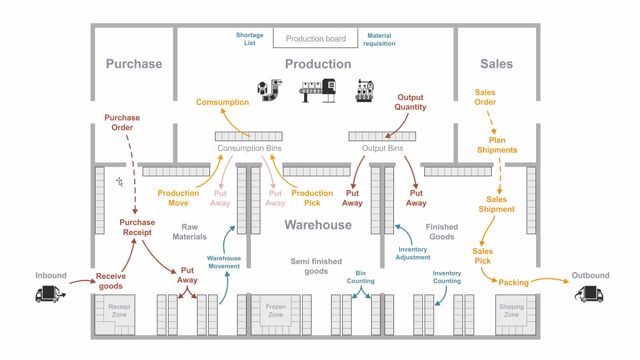


The inbound side of warehouse functionality in Business Central follows a clear sequence: an inbound document triggers a receipt, posting the receipt creates item ledger entries that make quantities visible across the company, and a put-away document then directs where to physically store the goods in specific bins.
Inbound documents come from three sources: purchase orders, transfer orders, and sales return orders. A purchase order signals a purchase receipt, while a transfer order signals a receipt document rather than a purchase receipt.
When you post a purchase receipt, the system creates item ledger entries. These show received quantities on the item card, but the goods are not yet stored away in the warehouse.
When you post a put-away document, the system creates warehouse entries. These detailed entries record which item, in which quantity, sits in which bin. The same item can be split across several bins if one bin lacks room.
Inbound documents that trigger a receipt
On the inbound side of the warehouse, the process starts with an order document that signals a receipt. This signal can come from several sources.
- Purchase order: signals a purchase receipt.
- Transfer order: signals a receipt document rather than a purchase receipt.
- Sales return order: also generates an inbound receipt.
All three are inbound documents that feed the same receiving flow in the warehouse.
Receiving and registering goods on the purchase receipt
Once goods arrive on the ramp, the typical flow is to receive the goods, place them in the received zone, and then register them on the purchase receipt with the correct items and the correct quantities.
Posting the purchase receipt and item ledger entries
When you post the purchase receipt, the system creates item ledger entries. From that point, everyone in the company can see the received quantities on the item card in Business Central.
It is important to understand what this visibility means. The quantities show what you have received, but the goods are not yet stored away in the warehouse. The receiving step and the storage step are separate.
Put-away documents and storing goods in bins
Depending on your setup, the purchase receipt automatically creates a put-away document. The put-away document takes the item and suggests which specific bins in the warehouse to store it in.
When you post the put-away document, the system creates warehouse entries. These are detailed entries that record which item, in which quantity, is placed in which bin.
A single item can end up in different bins. This happens when one bin does not have room enough for the full quantity, so the item is split across multiple bins.
Q&A
Which documents trigger an inbound receipt in Business Central?
Three documents trigger an inbound receipt: a purchase order, a transfer order, and a sales return order. A purchase order signals a purchase receipt, while a transfer order signals a receipt document rather than a purchase receipt.
What happens when you post a purchase receipt?
Posting a purchase receipt creates item ledger entries. Everyone in the company can then see the received quantities on the item card in Business Central. The goods are received but not yet stored away in the warehouse.
What is the purpose of a put-away document?
A put-away document takes the received item and suggests which specific bins in the warehouse to store it in. Depending on your setup, the purchase receipt creates it automatically.
What do warehouse entries record?
Warehouse entries are detailed entries that record which item, in which quantity, is placed in which bin. The system creates them when you post the put-away document.
Can the same item be stored in more than one bin?
Yes. If one bin does not have enough room for the full quantity, the same item can be split across different bins.