


If you set up a location in Business Central with the Require Shipment checkmark but leave Require Pick and Require Bin unticked, you get a simplified warehouse flow. You handle shipments through a warehouse shipment document without dealing with bins or separate pick documents.
This setup lets you combine several sales orders into one warehouse shipment. You release each sales order, create one warehouse shipment, and pull in lines from multiple orders before you post.
When you post the warehouse shipment, Business Central creates item ledger entries but no warehouse entries. This keeps inventory tracking accurate without adding bin-level warehouse management.
Location setup with Require Shipment only
The flow starts with a location configured for Require Receive and Require Shipment, but with nothing set for bins and picks. In this example, the location is called “external” to represent an external warehouse, but the same setup works for an internal warehouse depending on your strategy.
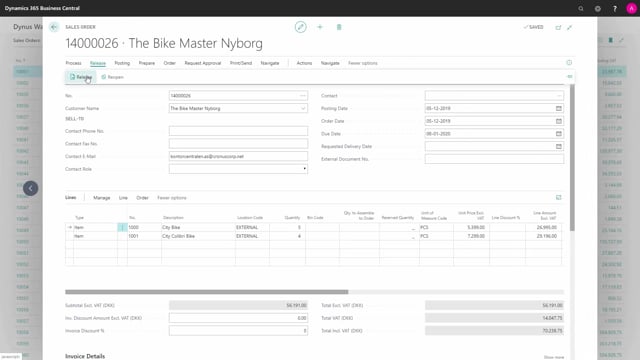
Because the location requires shipment, you cannot post a sales order directly. If you try, Business Central gives an error saying there is nothing to post, since no shipment has been made yet. You first have to release the sales order and create a warehouse shipment from it.
Creating a warehouse shipment from a sales order
Once the sales order is released, you go to the actions and select Create Warehouse Shipment. The warehouse shipment then contains the line from that sales order.
You can add more lines to the same shipment by using Get Source Documents. This lets you pull in lines from other sales orders, even when they belong to a different customer. In this example, an order for customer number 32000 is added to the same warehouse shipment.
Combining multiple sales orders in one shipment
The point of fetching several source documents is that multiple sales orders can flow into one warehouse shipment. You print the document and send it to your external warehouse, or to your internal warehouse if that fits your setup.
The printed document works like a picking document, but without bins. It is simply the complete list of items to be picked and shipped.
Posting the shipment and the resulting entries
After you get confirmation that everything has been picked and shipped correctly, you post the warehouse shipment. You can choose to both ship and invoice, or just ship.
When you post, Business Central posts across all the linked sales orders at once. In this example the system reports that three documents were posted, so all three sales orders are handled from a single warehouse shipment.
The result is item ledger entries only, with no warehouse entries created. If you scroll right on each sales order, you can see the shipped quantities reflected. In this example the quantities are 4 and 5, and the same applies on the other two sales orders.
Q&A
What does the Require Shipment setting do without Require Pick and Require Bin?
It gives you a simplified warehouse flow where you handle shipments through a warehouse shipment document, but without bins or separate pick documents. You still get item ledger entries when you post, but no warehouse entries.
Why can’t I post a sales order directly when Require Shipment is set?
Because the location requires a shipment, Business Central gives an error saying there is nothing to post until a warehouse shipment has been made. You first release the sales order and create a warehouse shipment from it.
Can I combine several sales orders into one warehouse shipment?
Yes. After creating the warehouse shipment, use Get Source Documents to pull in lines from other sales orders, even if they belong to different customers. When you post, Business Central posts across all the linked sales orders at once.
What entries does posting the warehouse shipment create?
Posting creates item ledger entries only. No warehouse entries are created, since the location does not use bins.