
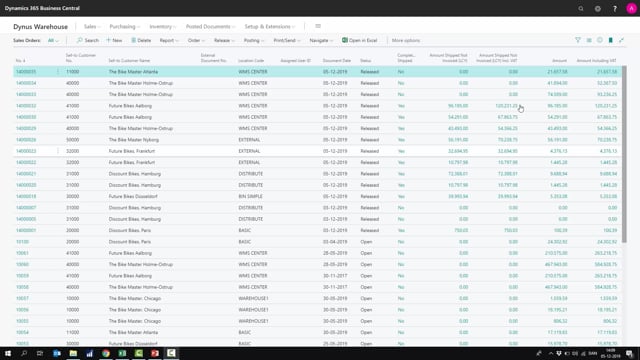


When you create warehouse shipments in Business Central using a pull strategy, you can use filters to fetch source documents automatically instead of selecting each document manually. This saves time when you have many source documents and a manual overview becomes difficult.
You set up one or more filters on the warehouse shipment to pull in source documents across all outbound source types. This includes purchase return orders, sales orders, transfer orders, and service orders.
Pull strategy versus manual selection of source documents
When you create a warehouse shipment in Business Central, you typically use the Get Source Documents function. With that function, you point out and click the individual source documents you want to include on the shipment.
The pull strategy works differently. Instead of selecting documents one by one, you define filters that fetch the matching source documents for you. This is useful when you have many source documents and it becomes difficult to keep an overview.
How to set up filters on a warehouse shipment
Start by creating a new warehouse shipment. Instead of using Get Source Documents to select documents manually, use the filter option to get the source documents.
You can define one or several filters, and you can set up different filter options to control which source documents are pulled in. When you run the function, Business Central applies those filters and fetches all the matching source documents in one go.
Which source documents the filters cover
The filters work across all outbound source types in Business Central. That means you can pull source documents from:
- Purchase return orders
- Sales orders
- Transfer orders
- Service orders
In short, any document that represents an outbound movement out of Business Central can be fetched through the filter functionality.
Q&A
What is the difference between using filters and Get Source Documents on a warehouse shipment?
With Get Source Documents you point out and select each source document manually. With filters, you define criteria that automatically fetch all matching source documents at once, which is faster when you have many documents to handle.
When should you use a pull strategy with filters for warehouse shipments?
Use filters when you have many source documents and a manual overview becomes difficult. The filters let you fetch the relevant documents without clicking through each one.
Which source document types can you pull into a warehouse shipment using filters?
You can pull source documents across all outbound source types, including purchase return orders, sales orders, transfer orders, and service orders.